


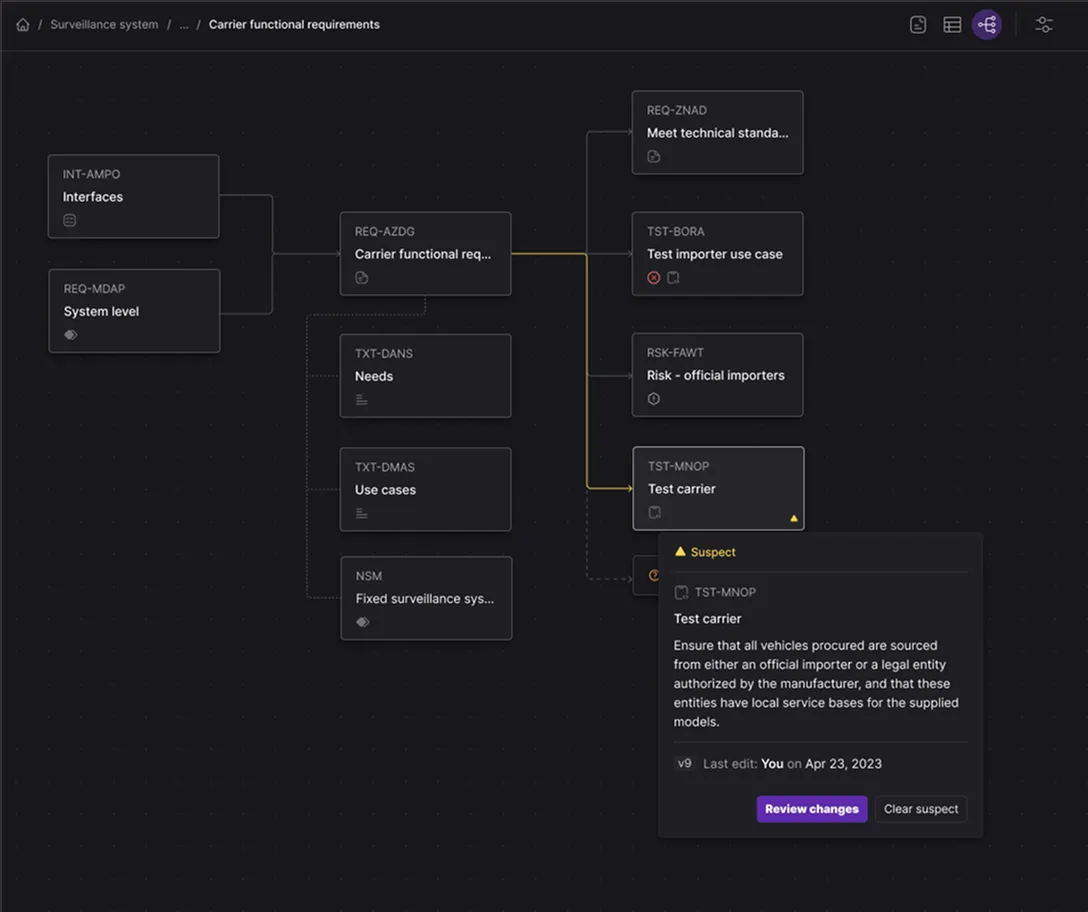
Flexible graph
All engineering data in a single, flexible graph. Requirements, tests, design parameters and variants as connected, configurable nodes and edges.
Variant management
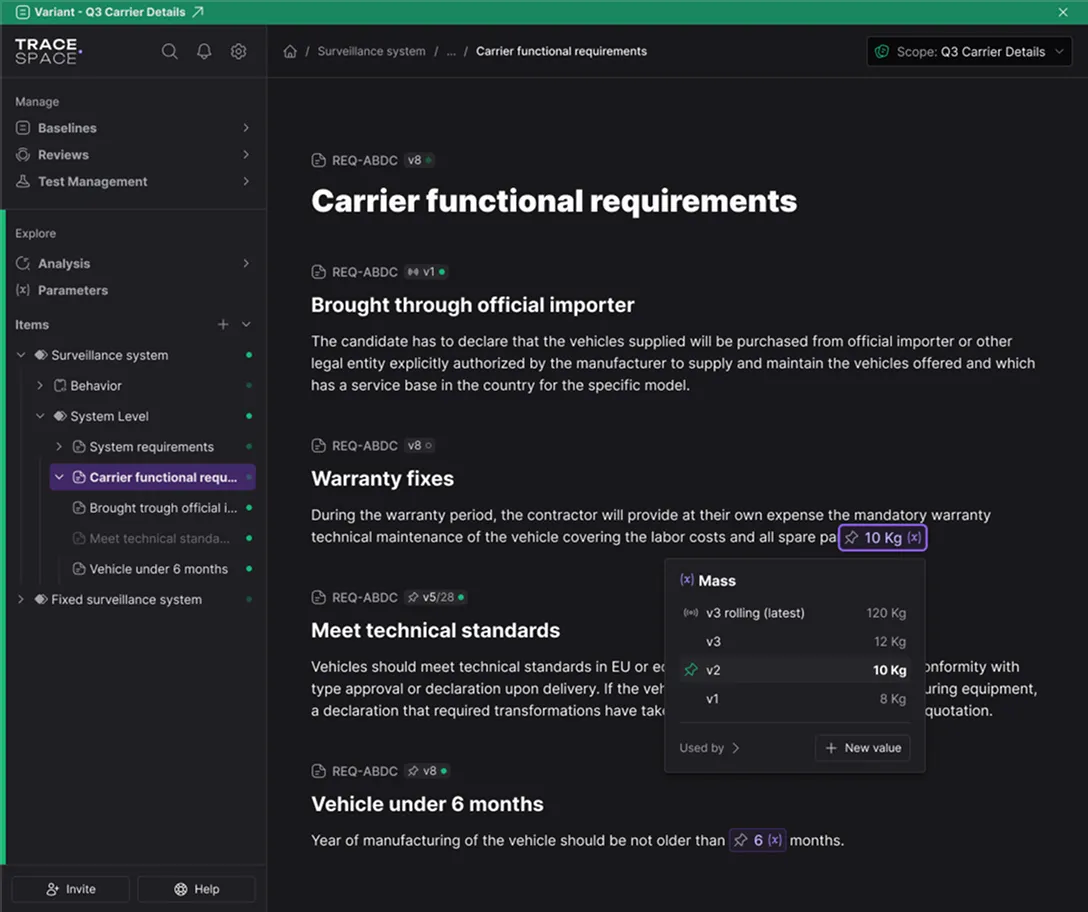
Product lines, variants and configurations live in one structure. Each variant references the exact version of the requirements, parameters and tests it needs.
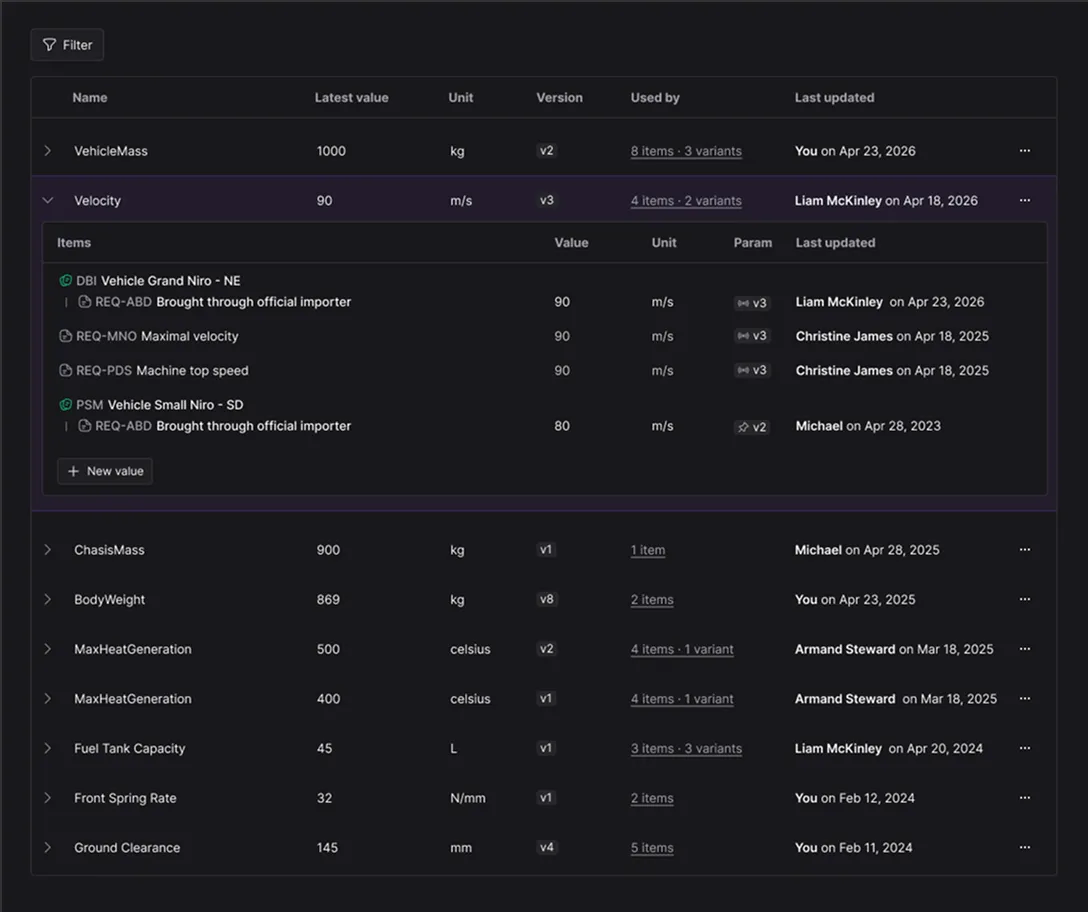
Key design parameters
Versioned design parameters with numerical values and units of measure, connected to requirements and tests, and also available in the API for integration with models and simulations. Continuous checks and analytics for ranges, tolerances and roll-ups.
Test management
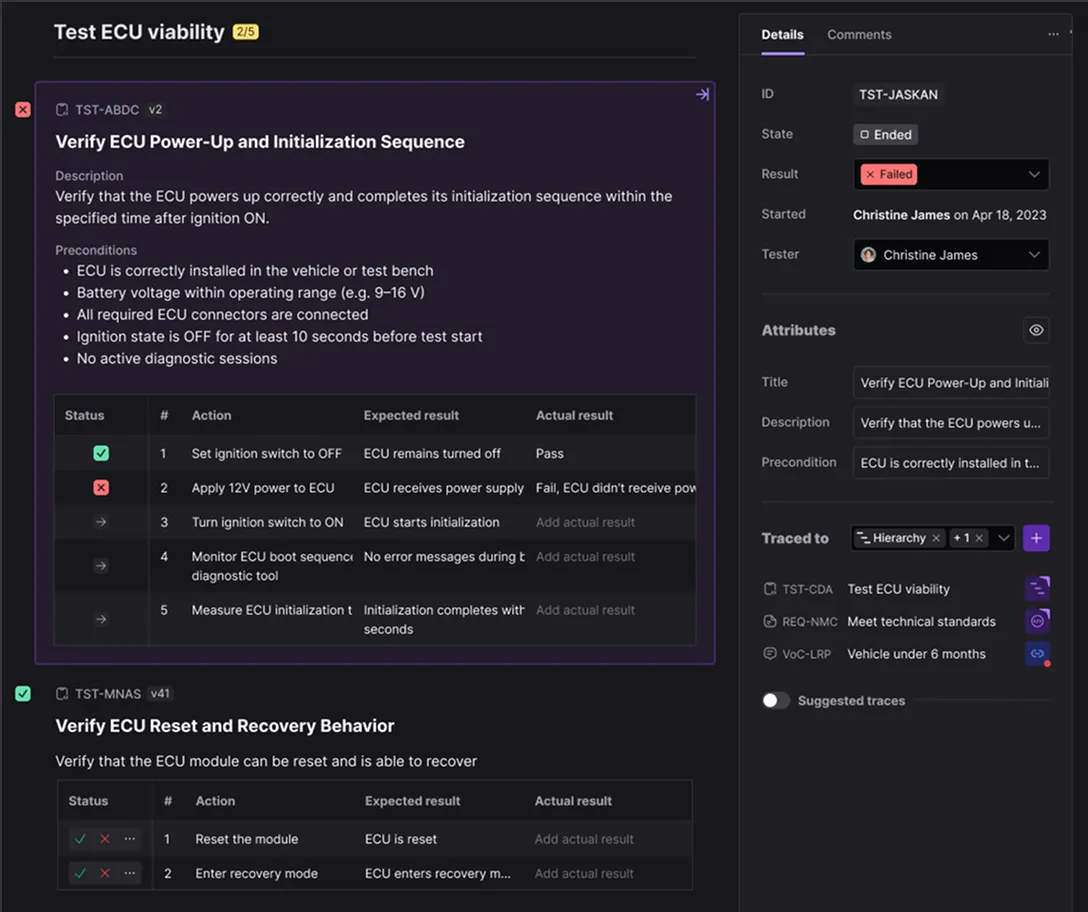
Continuous, integrated V&V, test runs and results traced to requirements and connected to variants and configurations.
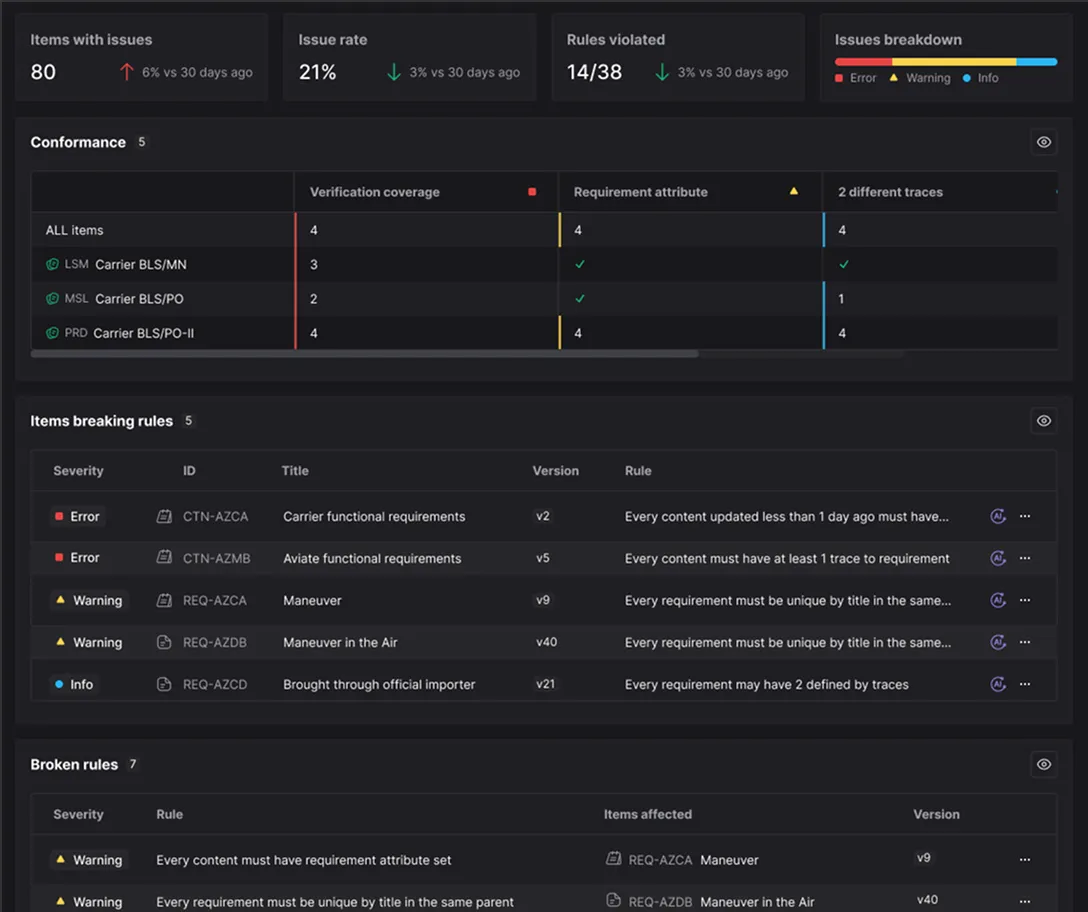
Continuous analysis
Deterministic rules across the graph check requirements quality, consistency, broken links, coverage gaps and parameters outside range or tolerance.
Space Agent and AI harness
Space Agent orchestrates a fleet of specialized hardware and systems engineering agents that work inside the graph: traceability chain, variants, coverage model and requirement structure. Change impact, quality, coverage and systems engineering analysis, democratized for every domain engineer. AI harness to support external agents.
Trinity by Trace.Space
AI agents enable teams to build physical products 10x faster. But the faster teams move, the more important it is to know what’s being built, what’s changing, and what’s actually been tested. Risk compounds when development outpaces the ability to track and verify changes.
Trinity connects requirements, design parameters, tests, and product configurations so engineers and AI agents can work from the same engineering context. Teams scale products faster while reducing costly rework and safety risks.
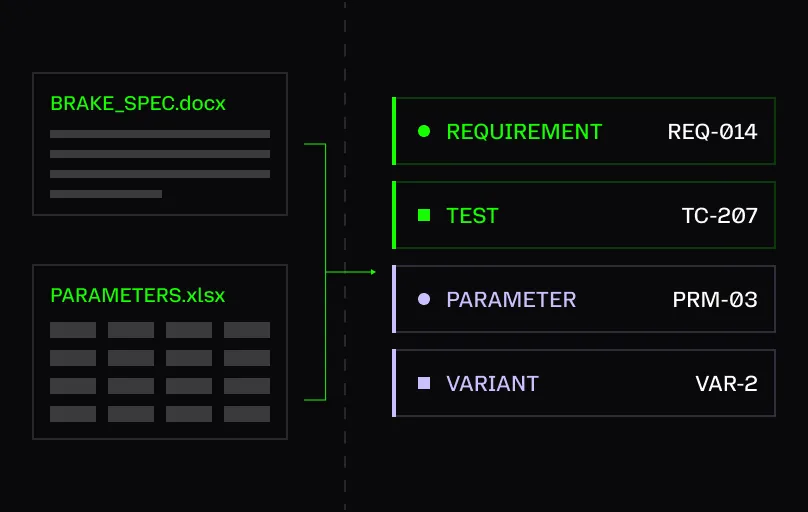
All engineering data in a single graph.
Requirements, tests, design parameters, variants, and other engineering data are connected in one model, with relationships and dependencies visible across the product.
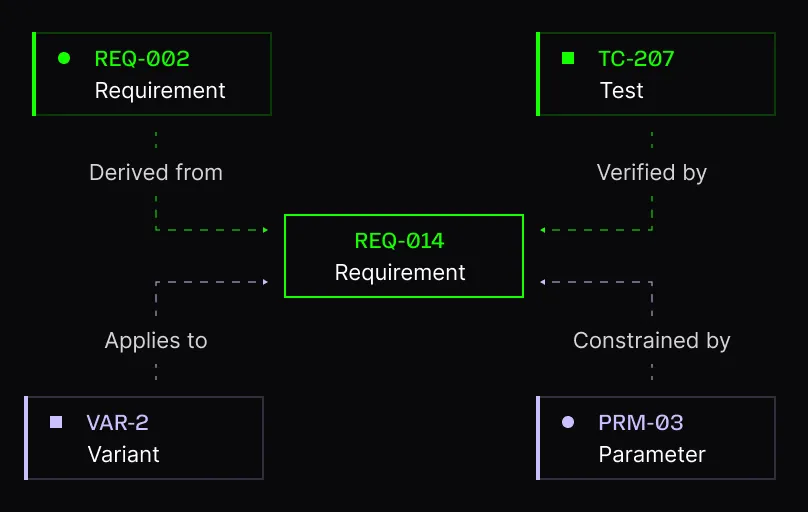
Connect every requirement, test, parameter, and variant.
Traceability that stays live instead of going stale in a spreadsheet. Change one parameter and see everything it touches, across every variant.
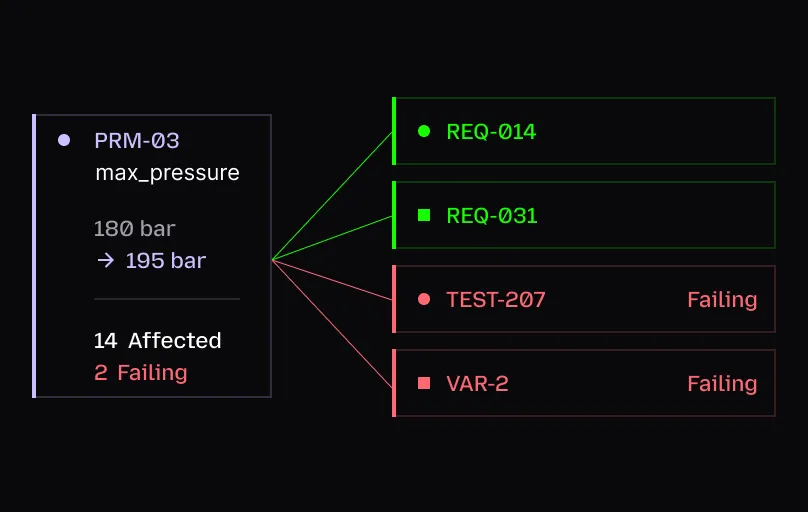
Change impact analysis, across the whole graph.
Reasoning and analysis run natively on the graph. Downstream impact, coverage gaps, what's affected, what's gone stale. Change a parameter and see which tests fail and which variants break, in seconds. Or ask Space Agent to do it for you.
Built for enterprise programs
Scale
Millions of requirements per project, unlimited API calls. No performance degradation and proven responsiveness.
Flexibility
Custom item types, traces, and rules allows to structure and model the system around any program, with traceability preserved as products, variants, and configurations multiply.
API and Agent-first
A fully documented API and MCP server expose Trace.Space data and functionality for integrations and automation. Connect internal systems, build custom workflows, and give your own AI agents access to engineering data.
Bring your own AI
Any agent or model your organization already approves runs against the graph through the same API and MCP server, which makes Trace.Space the harness around the AI you already trust rather than one more model to get approved, with Zero Data Retention and no training on your data.
Security & Compliance
Role-based access, audit trails, and enterprise security controls protect the engineering graph. Requirements, tests, risks, variants, and evidence remain traceable across changes and configurations. SOC 2 Type 2 and ISO 27001 certified.
Cloud or self-hosted deployment
Run Trace.Space in the cloud, private cloud, on-prem, or fully air-gapped. Choose the deployment model that fits your infrastructure and security requirements.
Industry Use Cases
Trace.Space powers next-gen product development in:


Built for Enterprise Engineering Teams
Harness complexity. Turn it into leverage.
Transform the way you manage engineering workflows.
Frequently Asked Questions
What is Trinity by Trace.Space?

Trinity is the AI harness to accelerate hardware R&D. Agents enable teams to build physical products 10x faster but not knowing what is being built, what changed and what has actually been tested compounds risk. Scaling software-defined products is impossible without shared engineering context. Trinity connects requirements, design parameters, tests, and product configurations so engineers and AI agents can work from the same product context.
Is Trace.Space available for on-premise deployment?
Yes. Trace.Space supports deployment in VPC, air-gapped, and fully on-premise environments. We understand the need for data sovereignty and security in regulated industries. Enterprise customers can choose a managed cloud deployment or self-host Trace.Space to meet internal IT and compliance requirements.
Can Trace.Space support our existing regulatory and compliance needs (e.g. ISO 26262, ASPICE, DO-178C)?
Yes. Trace.Space is built for safety- and quality-critical development. Generated requirements follow industry-compliant templates, and the system enforces structure, rationale, and verification coverage from the start. We support export for audits and offer trace coverage analytics aligned with automotive, aerospace, and medical standards.
How does AI help without taking control away from engineers?
Trace.Space uses AI to suggest – not dictate. AI helps structure requirements, generate trace links, and surface rationales or missing context based on prior data. Engineers always stay in control: they review, accept, or override suggestions. It’s augmentation, not replacement.
How do we migrate from our existing toolset (e.g. Jama, DOORS, spreadsheets)?
Trace.Space supports structured import from legacy tools and unstructured formats. Whether you’re migrating from a legacy platform or starting from fragmented documents, Trace.Space can ingest PDFs, DOCs, spreadsheets, JSON, and requirements from APIs – then normalize and organize them into a clean, traceable system.