AI-Native Requirements Management for Transportation Systems Engineering
Rail networks, urban transit systems, and ground transportation platforms are massive mechatronic programs where signaling, rolling stock, infrastructure, and embedded control systems all have to work together. Trace.Space gives transportation engineering teams cross-domain traceability and AI-driven analysis to manage this complexity, maintain safety certification, and keep programs on schedule.


Challenges of Managing Requirements
in Transportation
Transportation systems engineering faces a particular combination of challenges: safety certification rigor, multi-domain integration, long system lifecycles, and the increasing role of software and autonomy in traditionally mechanical systems.
Rail and transit systems involve thousands of requirements across signaling, rolling stock, track infrastructure, power systems, and embedded control software. These domains are often managed in separate tools with limited cross-visibility.
Safety standards like IEC 61508 and ISO 13849 require traceable safety cases from hazard analysis through safety requirements to verified safety functions. Assembling this evidence manually across domains is time-consuming and brittle.
Systems stay in service for 30 to 50+ years, with ongoing modifications, technology upgrades, and regulatory changes. Requirements traceability must persist across the entire operational lifecycle.
The rise of autonomous and semi-autonomous ground vehicles adds software-intensive requirements to what were traditionally mechanical and electrical programs, multiplying complexity at every level.
Key Trace.Space Features for
Transportation Teams
Cross-Domain System Traceability
Trace requirements across signaling, rolling stock, infrastructure, power, and embedded control systems in one coordinated structure. See the connections between domains that separate tools can't show you.
Safety Case Management
Build and maintain traceable safety cases from hazard identification through safety requirements, safety functions, and verification evidence. Satisfy IEC 61508, ISO 13849, and EN 50126/50128/50129 with traceability that stays current as designs evolve.
Long-Lifecycle Traceability
Transportation systems operate for decades. Trace.Space maintains full audit history, baseline management, and traceability across the entire operational lifecycle, including modifications, technology refreshes, and regulatory updates.
AI-Driven Analysis
AI continuously monitors for broken traces, missing verification evidence, and the downstream impact of changes across all system domains. Surface problems early, when they're fixable.
Configuration and Variant Management
Manage requirements across system configurations, route variants, and fleet variations. Track what's common across the system and where each variant diverges.
Multi-Stakeholder Coordination
Transportation programs involve operators, infrastructure owners, regulators, and multiple engineering contractors. Trace.Space supports requirement allocation and tracking across organizational boundaries.
Industry Standards and Security Compliance
Trace.Space supports all standards because the compliance workflows transportation teams live by requires flexibility to adapt to the context they work in, with traceability structures designed for the standards auditors actually check.

Examples of Supported Standards:
/
IEC 61508 (Functional Safety of E/E/PE Systems)
/
ISO 13849 (Safety of Machinery, Safety-Related Parts of Control Systems)
/
EN 50126 / EN 50128 / EN 50129 (Railway RAMS and Safety Standards)
Examples of Platform Security:
/
SOC 2 Type II certified
/
ISO 27001 compliant
/
GDPR and CCPA ready
/
Cloud, private VPC, on-premise, or fully air-gapped deployment
Frequently Asked Questions About Transportation Requirements
Can Trace.Space reuse requirements across fleet and route variants without duplicating them?

Yes. Trace.Space manages requirements across system configurations, route variants, and fleet variations in one structure, so you track what's common across the program and where each variant diverges. A shared requirement stays linked to every variant that uses it, which means a change to the common baseline shows its impact on each configuration instead of forcing a manual copy-and-update.
How does Trace.Space keep traceability valid across a 30 to 50 year system lifecycle?
Trace.Space maintains full audit history, baseline management, and traceability across the entire operational lifecycle, including modifications, technology refreshes, and regulatory updates. A requirement written decades ago keeps its trace to the current implementation and verification evidence, so you can reconstruct the state of the system at any point an audit asks for.
How does Trace.Space handle the new software requirements that autonomy adds to transportation programs?
Trace.Space ties software-intensive requirements from autonomous and semi-autonomous systems into the same cross-domain trace as the mechanical, electrical, and signaling work. Its AI continuously monitors that combined structure for broken traces, missing verification evidence, and the downstream impact of a change, so the added software complexity stays visible rather than siloed.
How does Trace.Space connect signaling, rolling stock, and embedded software when each domain uses a different tool?
Trace.Space connects the domains through its API-first integrations with Git, Jira, PLM systems, EDA tools, and CI/CD pipelines, then traces requirements across signaling, rolling stock, infrastructure, power, and embedded control in one coordinated structure. It fits onto the tools each domain already uses instead of replacing them, which gives you the cross-domain visibility separate tools can't show on their own.
Can Trace.Space run air-gapped for transportation programs with strict data control?
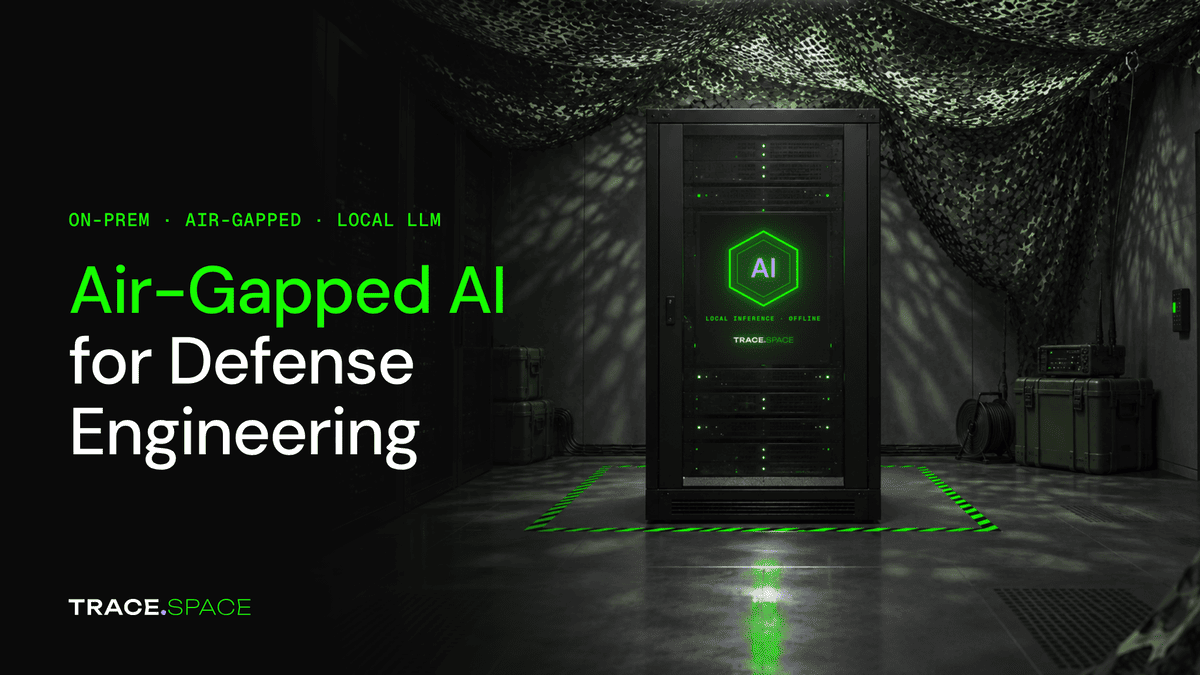
Yes. Trace.Space deploys in cloud, private VPC, on-premise, or fully air-gapped environments, so transportation programs that restrict external connectivity keep their requirements data inside their own boundary. In an air-gapped deployment the platform makes no outside calls, not even for AI, which means the analysis runs without sending data off the network.
How does Trace.Space manage requirements shared across operators, contractors, and regulators?
Trace.Space supports requirement allocation and tracking across organizational boundaries, so operators, infrastructure owners, regulators, and engineering contractors work against the same set of requirements. Each requirement carries its allocation and status as it moves between organizations, which keeps responsibility clear when a program spans multiple contractors.
/
LATEST ARTICLES
Resources and Insights






Moving millions of people safely takes more than good engineering. It takes traceable engineering. See the difference.
See traceability that's always audit-ready.