
// alternative
Trace.Space vs. IBM DOORS
IBM DOORS set the standard for requirements management in aerospace, defense, and automotive for over 30 years. It solved a real problem: large programs needed structured traceability, and DOORS delivered it at a time when nothing else could.
But the world DOORS was built for no longer exists. Products have gone from thousands to hundreds of thousands of specification items. Software now drives the hardware. Cross-functional teams need to collaborate in real time, not pass documents through a gated review cycle.
Trace.Space was built for this reality: AI-native, flexible, and designed for teams who need traceability at scale without the overhead.
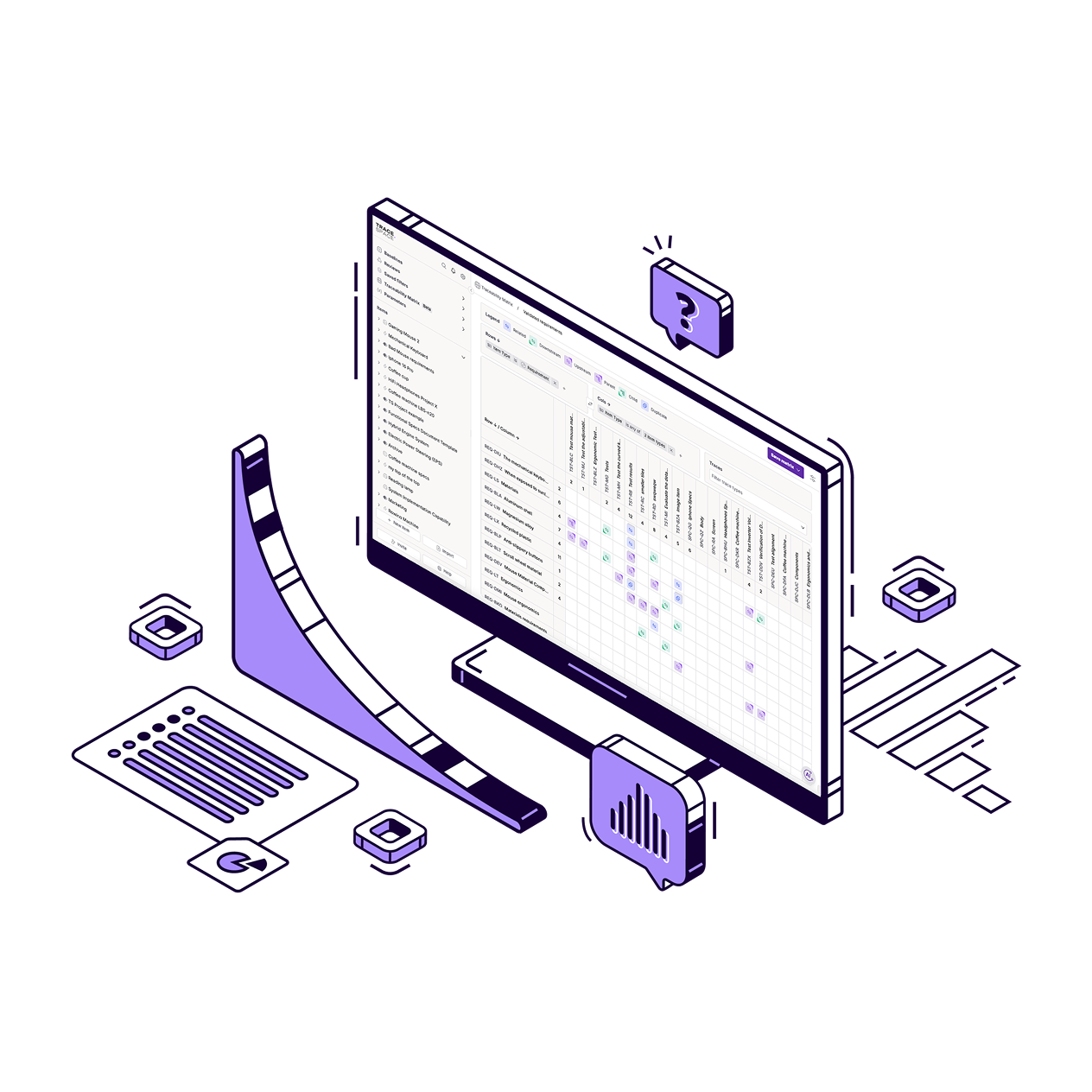
Why Teams Move Away from Legacy Tools
Performance degrades as requirements grow. Tools built for thousands of items buckle under hundreds of thousands.
Traceability is manual and fragile. One missed link cascades into compliance gaps and late-stage rework.
Specialist dependency slows everyone down. Only a handful of trained users can operate the tool, creating bottlenecks across the engineering org.
The UI feels like a time machine. Interfaces designed in the early 2000s demand more clicks, more training, and more patience than modern teams can afford.
AI is an afterthought, not a foundation. Bolted-on AI features can’t deeply understand your data the way an AI-native architecture can.
Integration is painful. Closed architectures and limited APIs make it difficult to connect with your existing engineering stack.

.png)
Why Switch to Trace.Space from IBM DOORS
Built for the AI-Driven Engineering Future
DOORS was built in 1991. It was never designed for an era where AI could detect broken traces, suggest missing coverage, or analyze the impact of a requirement change across an entire program. Trace.Space is. AI is embedded in the platform’s architecture, not added as a feature. It works in the background, surfacing issues before they become delays. And the way Trace.Space structures data means AI agents can read, reason about, and act on your engineering data today, not in some future release.
A Modern Interface
The most accurate traceability network is the one that gets the most contributions. When only a handful of DOORS specialists can operate the tool, critical information stays outside the system in spreadsheets, emails, and people’s heads. Trace.Space’s interface is designed for every engineer, not just the trained few. Faster onboarding means more people contributing data, which means fewer gaps in your trace network.
Flexibility Without Sacrificing Structure
DOORS enforces one way of organizing data. Trace.Space doesn’t. You define the structure that works for your program, and different teams can view the same data from different perspectives (by component, by system, by verification status) without breaking anything. And you can always restructure as your understanding of the system evolves. No DXL required.


Migrate from IBM DOORS to Trace.Space
DOORS migrations are among the most complex in the requirements management space, and we’ve designed for that.
Migration follows three phases: data extraction (via DOORS API, ReqIF export, or document export), data mapping (translating DOORS modules and link structures into your new Trace.Space workspace), and establishing the new structure (rebuilding and validating your trace network with AI assistance).
Our team provides white-glove migration support. We handle the extraction and mapping so your engineers can focus on validating the result, not wrestling with export scripts.
Frequently Asked Questions About Switching from IBM DOORS
Q: What data formats does Trace.Space support for import?
R&D leaders, systems engineers, and engineering managers working on complex, regulated products. Whether you're in aerospace, automotive, defense, medtech, or another industry where requirements management and traceability matter, you'll find the right conversations here.
Q: How long does a typical migration take?
A mix. We run in-person dinners and roundtables, online webinars, and product walkthroughs. The format changes, but the focus stays the same: practical conversations about systems engineering, complexity, and how modern teams are keeping up.
Q: Can Trace.Space handle regulated and compliance-heavy environments?
No. Our events are open to anyone working on complex product development. You don't need to use Trace.Space or be evaluating it. If the topics are relevant to your work, you're welcome.
Q: Will my team need extensive training to get started?
Yes. All Trace.Space events are free.
Q: Do I lose my DXL customizations in the migration?
Yes. All Trace.Space events are free.

Ready to Move from IBM DOORS to Trace.Space?
Ready to See What Modern Requirements Management Looks Like?
You built incredible products with DOORS. Now build the next generation with a platform designed for how engineering works today.