
// alternative
Trace.Space vs. Jama Connect
Jama Connect brought structure and traceability to engineering teams that previously relied on spreadsheets. It gave organizations a way to manage reviews, collaborate across functions, and support compliance workflows.
But as products have become software-defined and interdependencies have exploded, Jama’s architecture is showing its age. Navigation across item types is slow. Global visibility is limited. And AI capabilities remain surface-level, bolted onto a foundation that wasn’t designed for them.
Trace.Space was built for the complexity that modern engineering teams face today, with AI woven into every workflow, not layered on top.
Why Teams Move Away from Legacy Tools
Performance degrades as requirements grow. Tools built for thousands of items buckle under hundreds of thousands.
Traceability is manual and fragile. One missed link cascades into compliance gaps and late-stage rework.
Specialist dependency slows everyone down. Only a handful of trained users can operate the tool, creating bottlenecks across the engineering org.
The UI feels like a time machine. Interfaces designed in the early 2000s demand more clicks, more training, and more patience than modern teams can afford.
AI is an afterthought, not a foundation. Bolted-on AI features can’t deeply understand your data the way an AI-native architecture can.
Integration is painful. Closed architectures and limited APIs make it difficult to connect with your existing engineering stack.

.png)
Why Switch to Trace.Space from Jama Connect
AI-Native Architecture for the Engineering Future
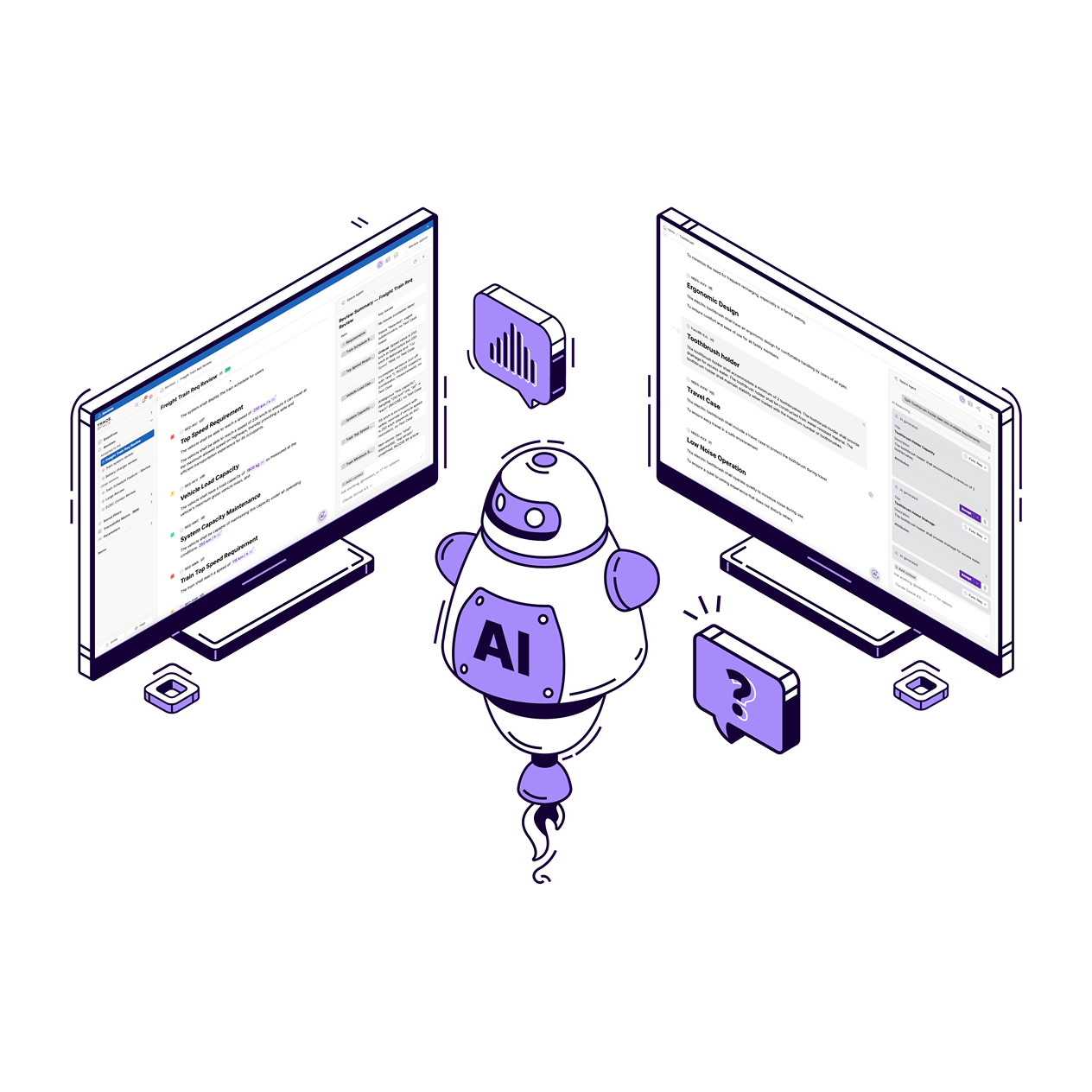
Every competitor will tell you they have AI. The difference is in the foundation. Trace.Space structures data so AI can see the full network of requirements, traces, and changes. AI surfaces suggested traces, detects broken links, identifies gaps in coverage, and analyzes change impact in real time. It works explicitly (you can chat with it) and implicitly (it’s always working in the background). And because you can switch models and host them locally, you stay in control. This isn’t a feature add-on. It’s the architecture itself, built for a future where AI agents will work alongside your engineering team.
Ease of Use That Drives Adoption
The biggest risk with any requirements tool is that people don’t use it. Domain engineers, firmware leads, and hardware teams skip tools that feel slow or unintuitive, and the traceability network suffers. Trace.Space’s modern UI is fast to learn and fast to use. When more people contribute, your data becomes more complete, and your decisions become better informed.
Extensibility That Fits Your Stack
Trace.Space is API-first and built to connect. Ingest data in any format. Push requirements to Jira, Git, PLM, or your custom systems. Unlike Jama, where integration work is heavy and API access is constrained, Trace.Space gives your developers and automation tools clean, open interfaces to build on.


Migrate from Jama Connect to Trace.Space
Migration is the part that stops most teams from making a move. We’ve designed the process to reduce that friction.
Migration from Jama follows three phases: data extraction (via API or supported export formats), data mapping (aligning your Jama structure to your new Trace.Space workspace), and establishing the new structure (rebuilding your trace network with AI-assisted linking).
We provide white-glove migration support. Our team handles the heavy lifting so yours doesn’t have to pause.
Frequently Asked Questions About Switching from Jama Connect
Q: What data formats does Trace.Space support for import?
R&D leaders, systems engineers, and engineering managers working on complex, regulated products. Whether you're in aerospace, automotive, defense, medtech, or another industry where requirements management and traceability matter, you'll find the right conversations here.
Q: How long does a typical migration take?
A mix. We run in-person dinners and roundtables, online webinars, and product walkthroughs. The format changes, but the focus stays the same: practical conversations about systems engineering, complexity, and how modern teams are keeping up.
Q: Can Trace.Space handle regulated and compliance-heavy environments?
No. Our events are open to anyone working on complex product development. You don't need to use Trace.Space or be evaluating it. If the topics are relevant to your work, you're welcome.
Q: Will my team need extensive training to get started?
Yes. All Trace.Space events are free.

Ready to Move from Jama Connect to Trace.Space?
Ready to See What Modern Requirements Management Looks Like?
Your engineering team deserves tools that match the complexity of what you’re building. See how Trace.Space compares in a live demo with your own use case.