
The Alternative to Traditional Requirements Tools: Trace.Space
Engineering teams evaluating alternatives to IBM DOORS, Jama, Polarion, Codebeamer, or Jira aren’t looking for something “new.” They’re looking for something that actually keeps up.
Legacy requirements tools helped build incredible products. But they were designed for a world of 10,000 items, slower release cycles, and limited cross-functional dependencies.
That world no longer exists.
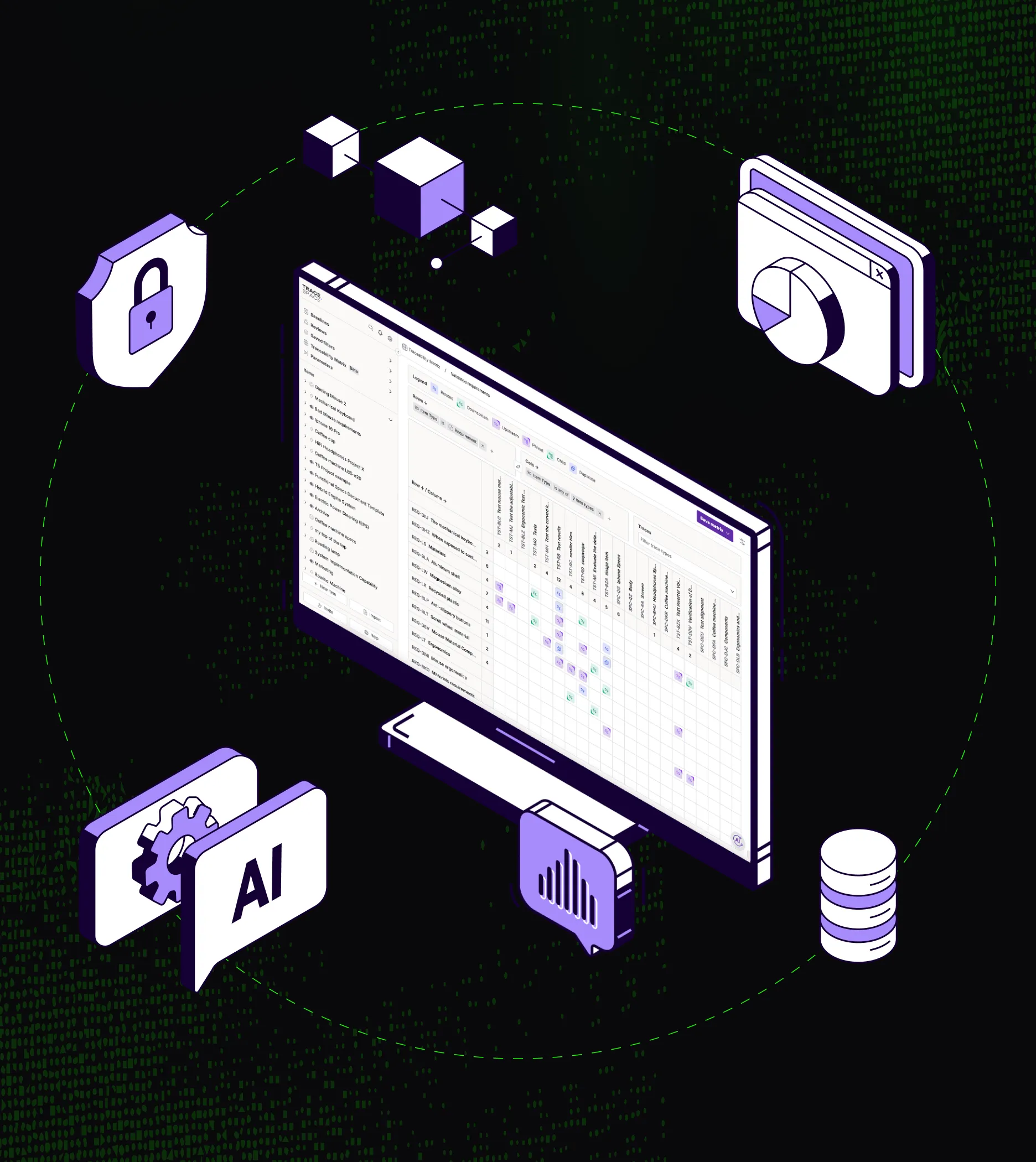
Modern products run on software-defined hardware, dense interdependencies, and hundreds of thousands of interconnected specification items. Trace.Space was built from the ground up for that reality: large-scale data, AI-native workflows, real-time collaboration, and traceability that doesn’t collapse under load.
We don’t replace engineers. We amplify them.
Why Teams Move Away from Legacy Tools
Performance degrades as requirements grow. Tools built for thousands of items buckle under hundreds of thousands.
Traceability is manual and fragile. One missed link cascades into compliance gaps and late-stage rework.
Specialist dependency slows everyone down. Only a handful of trained users can operate the tool, creating bottlenecks across the engineering org.
The UI feels like a time machine. Interfaces designed in the early 2000s demand more clicks, more training, and more patience than modern teams can afford.
AI is an afterthought, not a foundation. Bolted-on AI features can’t deeply understand your data the way an AI-native architecture can.
Integration is painful. Closed architectures and limited APIs make it difficult to connect with your existing engineering stack.

Trace.Space vs. Other Tools
Every engineering team’s situation is different. Explore the comparisons below to see how Trace.Space addresses the specific challenges you face with your current tool.

Trace.Space vs. Jama Connect
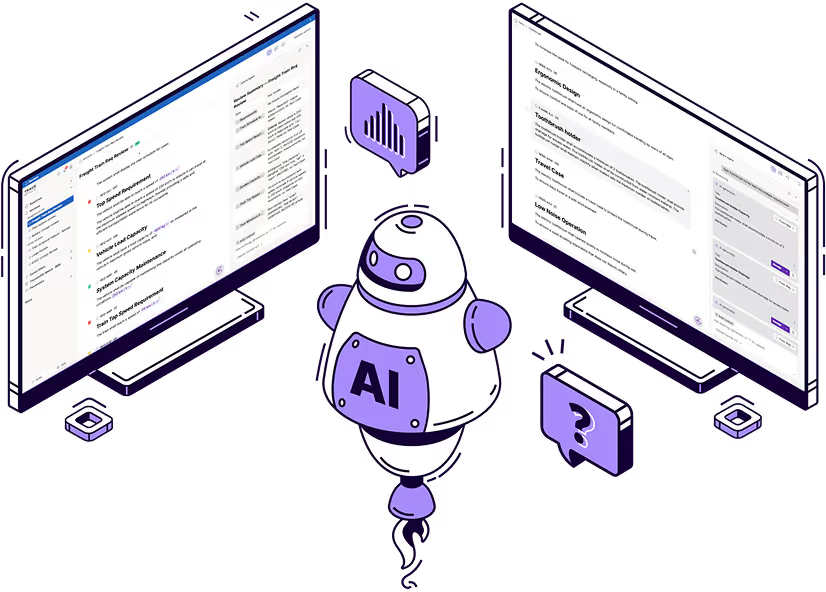
Teams on Jama often hit friction as products grow: slow navigation across item types, limited global visibility, and a review-centric workflow that struggles to keep pace with fast-changing, software-defined products. Trace.Space gives you AI-powered traceability and flexible data views that scale with your complexity.
Trace.Space vs. IBM DOORS
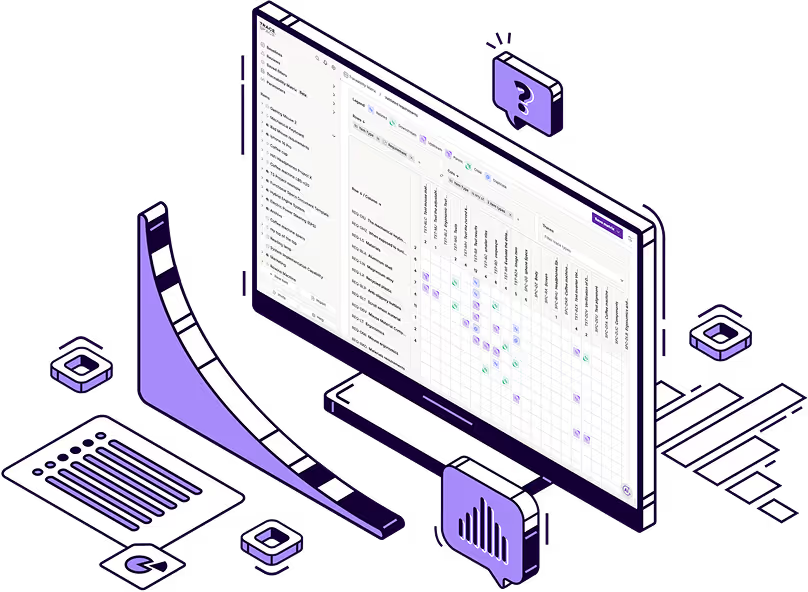
DOORS defined requirements management for decades. But its document-centric architecture, DXL scripting dependency, and rigid structure were designed for a waterfall world. Trace.Space delivers the same traceability depth with a modern, AI-native interface that any engineer can use on day one.
Trace.Space vs. PTC Codebeamer
Codebeamer offers a broad ALM feature set, but that breadth comes with complexity. Dense configuration, steep learning curves, and cognitive overload keep adoption low among the domain engineers who need it most. Trace.Space is built for fast onboarding and everyday usability without sacrificing depth.
Trace.Space vs. Polarion (Siemens)
Polarion’s tight integration with the Siemens ecosystem is a strength if you live entirely within that stack. For everyone else, it means vendor lock-in, complex licensing, and limited flexibility. Trace.Space is stack-agnostic, API-first, and built to fit your toolchain, not the other way around.
Trace.Space vs. Jira
Jira is excellent for task management, sprint planning, and developer workflows. But it was never designed for requirements management. When teams try to force-fit Jira into that role, they end up with workarounds, lost context, and compliance gaps. Trace.Space integrates natively with Jira and fills the requirements layer Jira was never built to handle.


Ready to See What Modern Requirements Management Looks Like?
Whether you’re migrating from a legacy platform or building your requirements practice for the first time, Trace.Space gives your team the speed, traceability, and AI-native intelligence to move faster without losing control.