
AI-Native Requirements Management
Requirements management has not changed in twenty years. The tools got more expensive. The processes got more bureaucratic. The actual work, cross-referencing spreadsheets, searching by keyword, manually linking test cases to specifications, stayed the same.
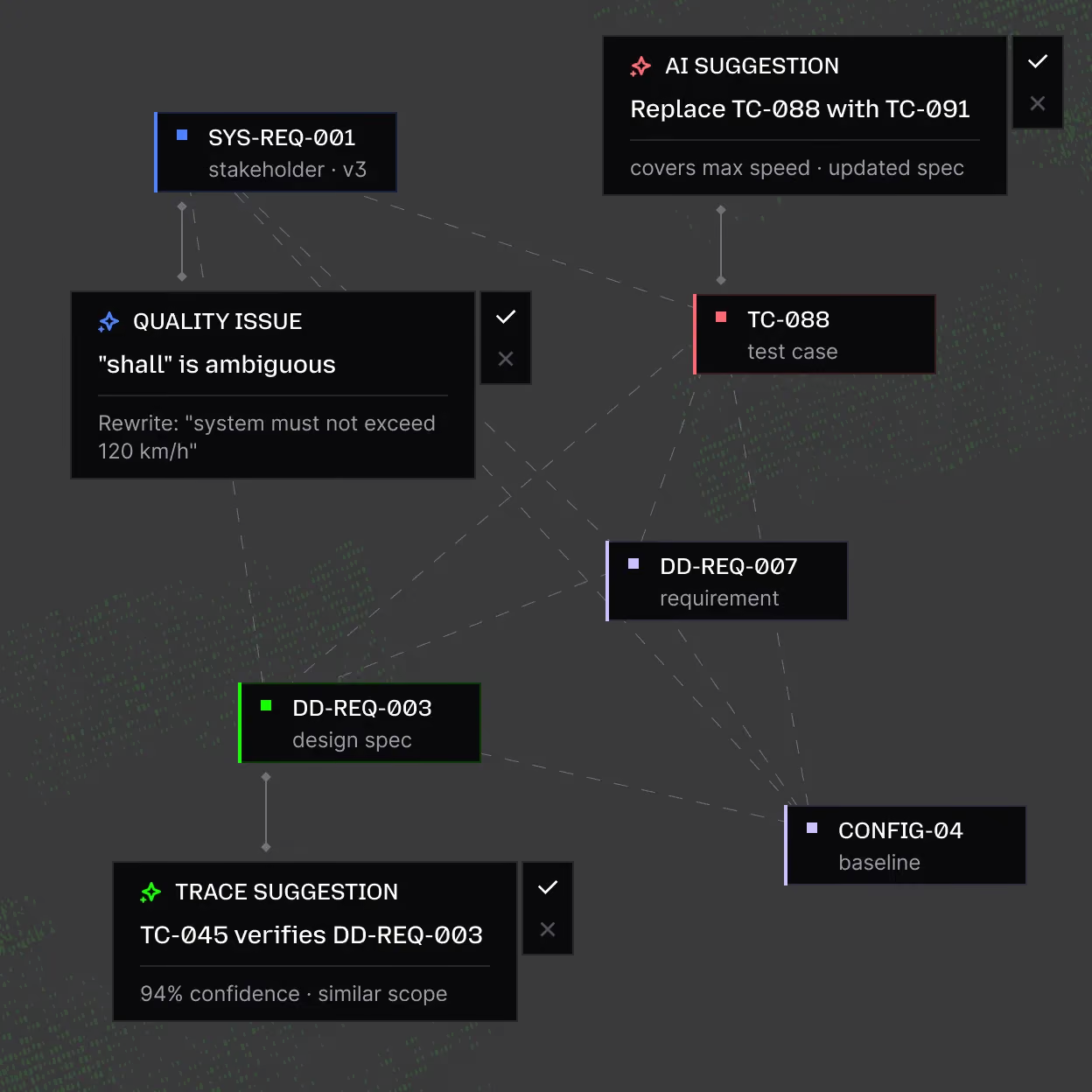
Trace.Space treats requirements as living system assets, not static records. AI is embedded in the workflow: detecting broken links, surfacing change impact, generating trace suggestions, and checking quality in real time. Not a feature added last quarter. The foundation the platform was built on.
Meet Space Agent
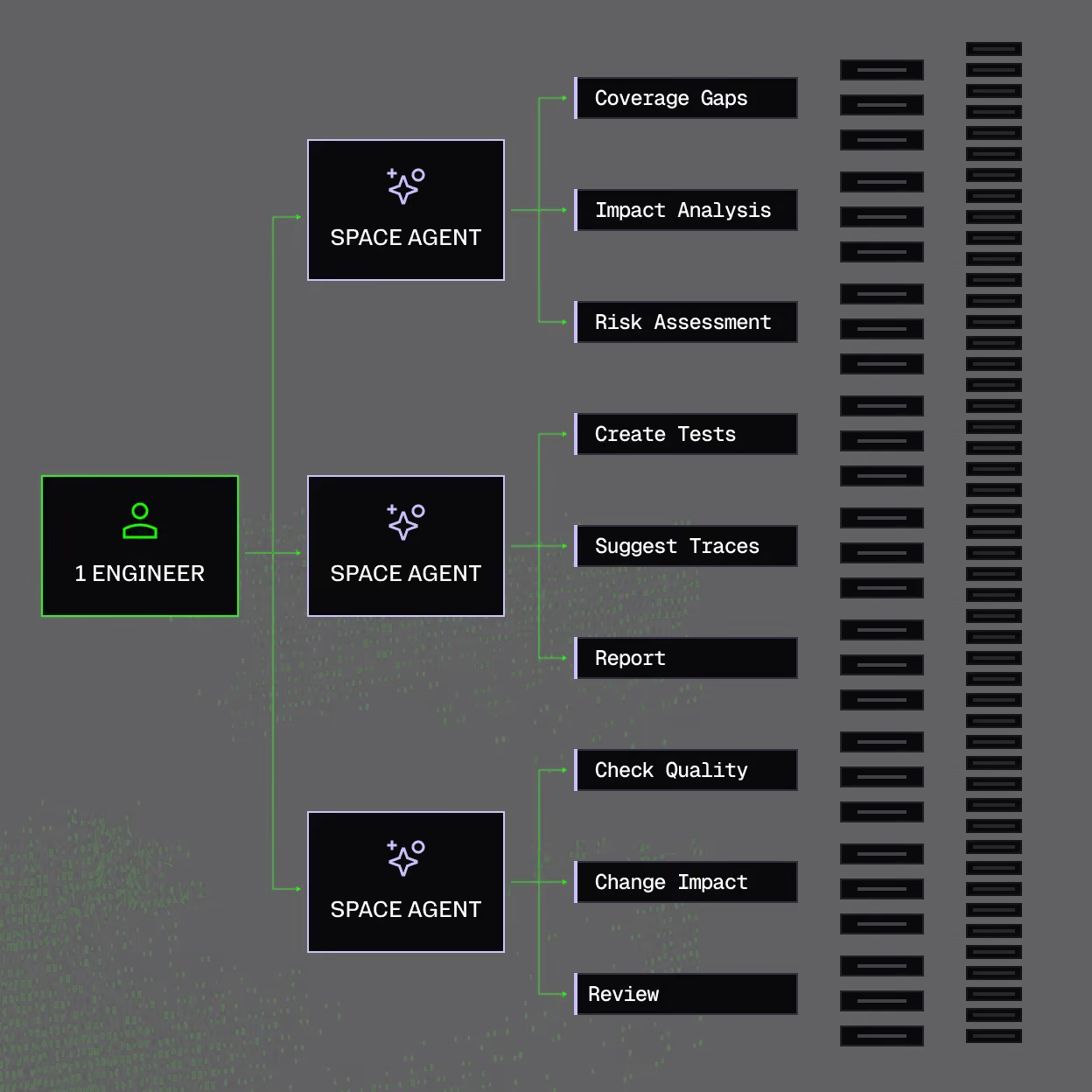
Space Agent is the AI agent built for systems engineers inside Trace.Space. It works directly with your data model and handles coverage analysis, risk assessment, requirements creation, and trace suggestions in seconds.

Analyze and Strengthen Every Requirement
Real-time quality checks against INCOSE and ISO/IEC standards. Ambiguity, incompleteness, testability, and structural issues flagged as you write. Every requirement gets specific, actionable feedback instead of a red/green checkbox.
Automate Traceability and Manage Links Across Systems
AI maps trace links across your full requirement set. When traces should exist but do not, the platform tells you. When traces are broken by a change, the platform tells you that too. Traceability is maintained continuously, not reconstructed before audits.
Trace the Impact of Every Change
A single requirement change can ripple through dozens of downstream artifacts. Trace.Space shows you the full blast radius before you commit: which test cases, which design elements, which sibling requirements are affected. Course-correct before the damage compounds.
Detect Gaps and Duplicates Before They Spread
Duplicate requirements creep in across large programs. Coverage gaps hide in plain sight. The AI surfaces both: duplication across domains, missing coverage between levels, and orphaned items that connect to nothing.
Control Your AI Model: BYOM, Hosted, or Air-Gapped
Bring your own LLM keys, use models hosted by Trace.Space, or run everything locally in an air-gapped environment. AI processing happens on your terms. No customer data is used for training. Provider transparency at all times.


AI Recommends, Engineers Decide
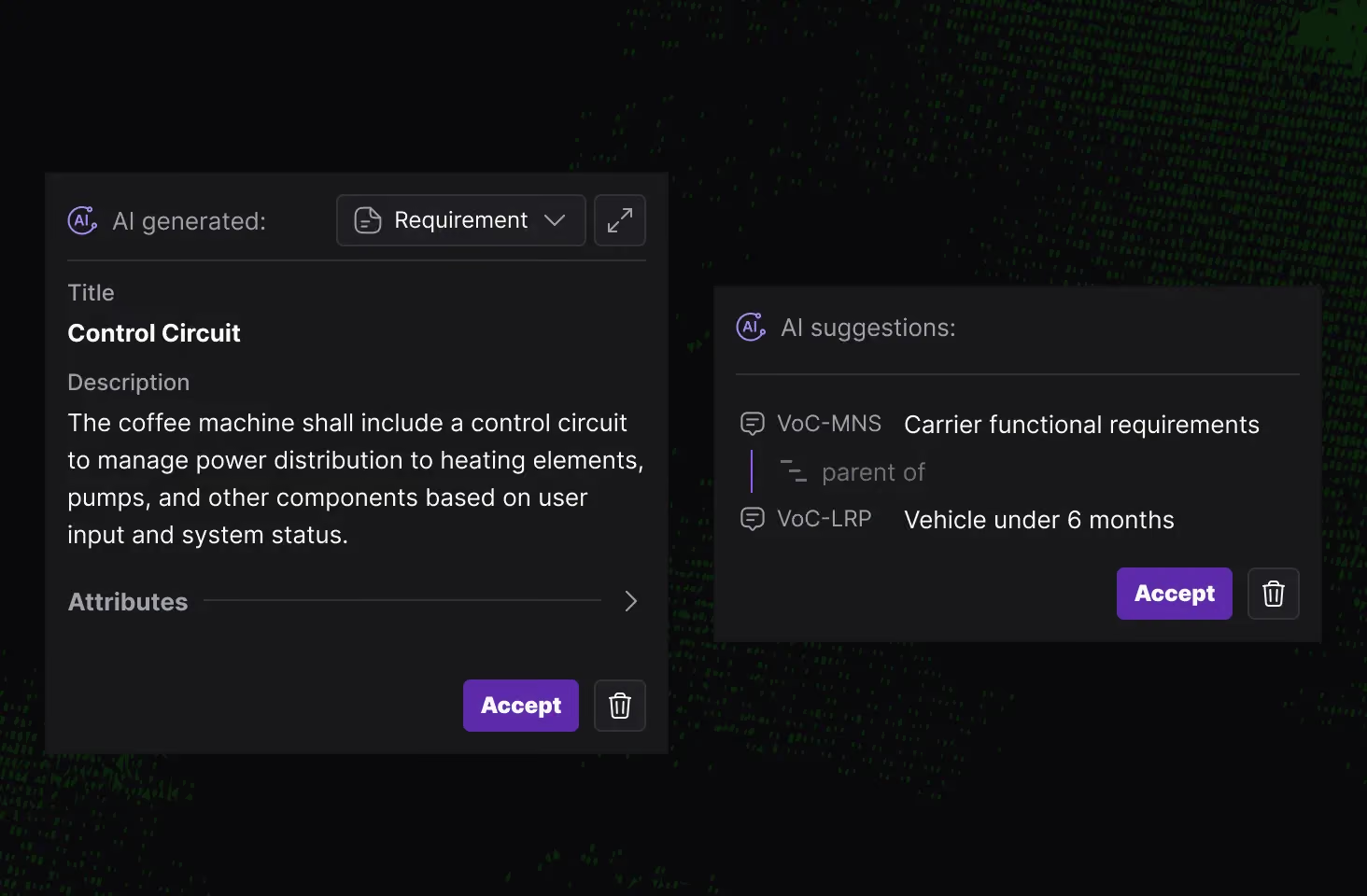
Every AI recommendation in Trace.Space is routed through engineering review before acceptance. The AI suggests trace links. You accept or reject them. The AI flags a quality issue. You decide if it matters. The AI drafts a requirement. You refine it.
This is not a philosophical choice. It is a regulatory one. In aerospace, automotive, defense, and medical devices, a human must own the engineering decisions. Trace.Space is built for that reality. The AI does the coordination work. Engineers make the calls.

Frequently Asked Questions
What's the difference between AI-native requirements management and AI added to a legacy tool?

AI-native means the platform was built around AI from day one, so the AI works inside your data model instead of sitting beside it as a separate assistant. In Trace.Space, AI detects broken links, surfaces change impact, generates trace suggestions, and checks quality in real time as part of the core workflow. AI added to a legacy tool usually runs as a feature layer on top of a structure that wasn't designed for it.
How does Trace.Space improve the quality of individual requirements?
Trace.Space runs real-time quality checks on each requirement against INCOSE and ISO/IEC standards as you write. It flags ambiguity, incompleteness, testability problems, and structural issues, then gives specific, actionable feedback instead of a simple red or green checkbox. You see exactly what to fix on each item rather than a pass/fail score.
Can AI-native requirements management be used in regulated industries like aerospace and medical devices?
AI-native requirements management works in regulated industries precisely because Trace.Space routes every AI recommendation through engineering review before acceptance. In aerospace, automotive, defense, and medical devices, a human has to own the engineering decisions, so the AI suggests trace links and flags issues while engineers accept, reject, or refine them. This keeps the workflow audit-ready while still cutting the manual coordination work.
Does the AI make engineering decisions automatically?
No. The AI never makes engineering decisions on its own; it recommends, and engineers decide. Space Agent suggests trace links, flags quality issues, and drafts requirements, but you accept, reject, or refine each one. This isn't only a design choice, it's a regulatory requirement in safety-critical industries.
How does Trace.Space find duplicate requirements and coverage gaps?
Trace.Space surfaces duplicates and coverage gaps automatically by analyzing your full requirement set instead of waiting for a review milestone. The AI flags duplication across domains, missing coverage between requirement levels, and orphaned items that connect to nothing. Problems that usually hide until integration show up the moment they appear.
Does Trace.Space update trace links automatically when a requirement changes?
Trace.Space maintains traceability continuously rather than reconstructing it before an audit. When a trace should exist but doesn't, the platform tells you; when a change breaks a trace, it tells you that too. Every requirement change also shows its full blast radius, so you see which tests, design elements, and sibling requirements are affected before you commit.


See AI-Native Requirements Management in Action
Bring your requirements. We will show you what the AI finds in the first five minutes.