
Trace.Space Blog
Product

Janis Vavere
October 28, 2026
How Trinity Works: Design Parameters
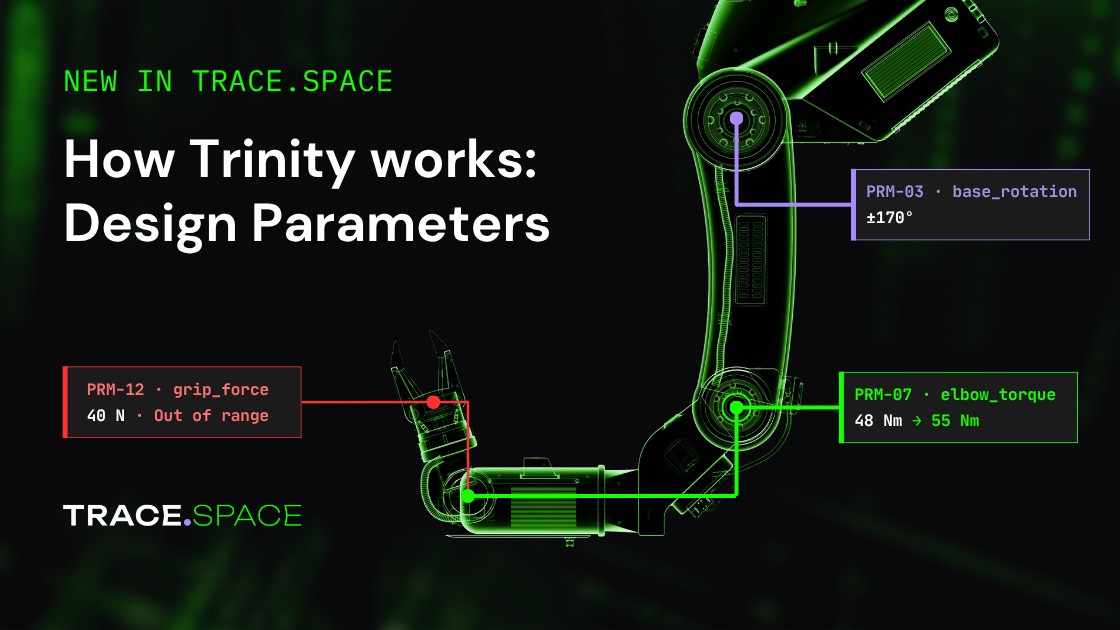
Define a value once and use it in every requirement and test that depends on it. Change it, and the Used by list shows every item it touches, while each product variant resolves the same requirement to its own number.


Define a value once and use it in every requirement and test that depends on it. Change it, and the Used by list shows every item it touches, while each product variant resolves the same requirement to its own number.
Product
Janis Vavere
October 28, 2026
How Trinity Works: Design Parameters
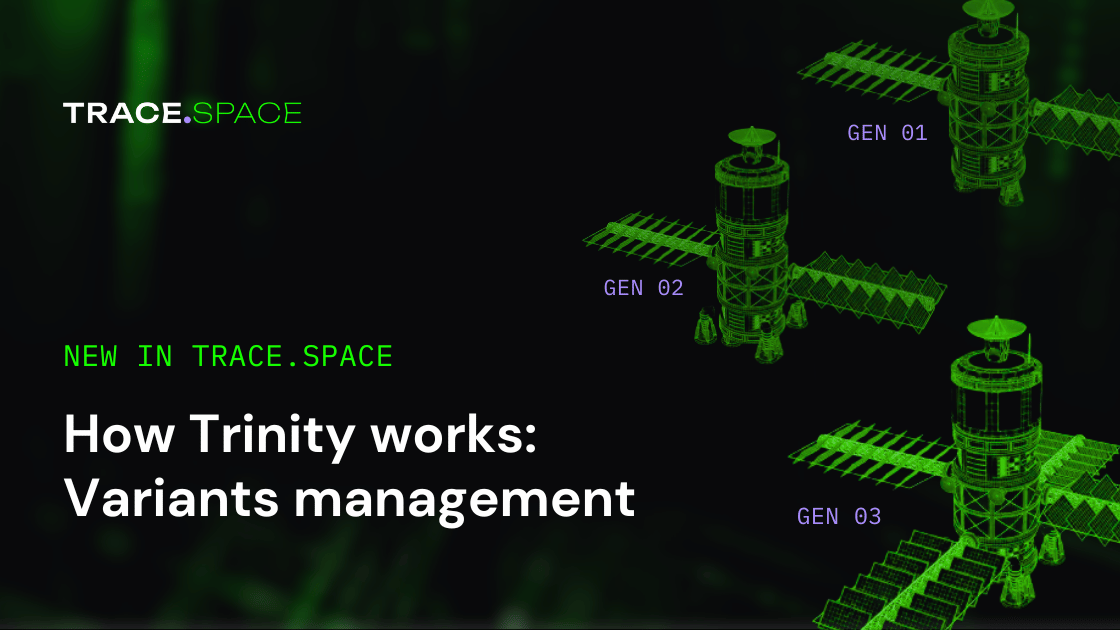
Variants Management lets you build every product configuration from one shared requirements set. Each variant pins only what differs, so there are no copies to keep in sync.
Product
Janis Vavere
October 26, 2026
How Trinity Works: Variants Management

As AI accelerates engineering, new hardware products and prototypes are coming out 10x faster but knowing what is being built, what changed and what has actually been tested becomes a matter of physical safety. Today, Trace.Space introduces Trinity.
News
Janis Vavere
September 29, 2026
Trace.Space Introduces Trinity, the Agent Harness to Accelerate Physical AI

Defense and hardware startups keep winning fly-offs and then failing to produce fleets. The industry calls this a manufacturing problem. The constraint sits earlier than that: a prototype has to be right once, a fleet has to stay right across every variant while the design keeps moving, and the tools underneath were built for products that ship once.
Engineering
Janis Vavere
September 3, 2026
Where Are the Hundred Thousand?
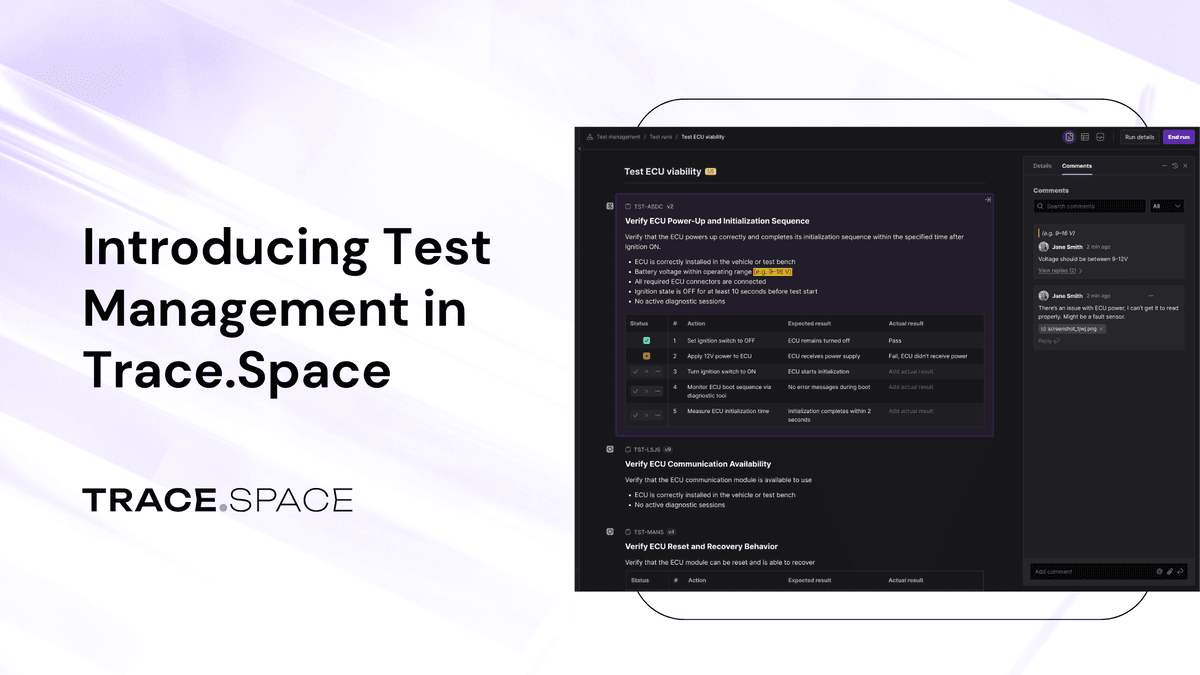
Test Management is now available in Trace.Space. You can define test cases as items, break them into steps, send them to a test run, hand that run to the person who will execute it, and see every result land back on the item that was tested.
Product
Janis Vavere
August 5, 2026
Introducing Test Management in Trace.Space

Requirements live in one tool, tests in another, and the link between them is maintained by hand. This post argues verification status should be computed instead of typed into a dropdown, and walks through what hand-maintained traceability actually costs: double entry, statusing that goes stale overnight, and stale passes that look exactly like valid ones.
Engineering

Matt Maclaine
July 30, 2026
Verification Is Just Like, Your Opinion, Man

Most teams know they need to bring AI into engineering, but have no working reference for what that actually looks like inside a regulated, multi-domain program. Agentic systems engineering is that reference. It is the practice of running engineering work, requirements analysis, traceability, verification, change impact, compliance, through AI agents that operate inside an engineering data model under human review. This article defines the term, separates it from neighboring ideas, and shows what it looks like in the regulated programs where it has the most consequence.
Engineering
Janis Vavere
June 2, 2026
What Is Agentic Systems Engineering

Systems engineering is slow because the world it has to describe is too big to hold in one head. A modern aircraft, a fleet of drones, a connected vehicle, a medical device with embedded firmware. Each one is hundreds of thousands or millions of specification items spread across mechanical, electrical, software, and regulatory domains. Engineers spend more time finding out what the system is than deciding what it ought to be. Reviews stall. Traces break. Audits arrive before the documentation can be produced.
Product
Janis Vavere
May 26, 2026
Trace.Space: the first agentic systems engineering platform
There are no available blogs matching the current filters.
Reset All
Built for Enterprise Engineering Teams
Want to see how Trace.Space fits into your stack?
Our team will walk you through enterprise use cases, integrations, and deployment options, tailored to your environment.